
A drainage grate is installed over a drainage channel or inlet to allow surface water to enter the drainage system while helping prevent large debris from entering the channel.
Ductile iron drainage grates are commonly used in areas where the drainage system may be exposed to traffic, weather, impact, and repeated use.
Typical applications include:
The grate and frame form an important part of the drainage inlet. The correct design should be selected according to the installation environment, dimensions, expected traffic, drainage requirements, and applicable standards.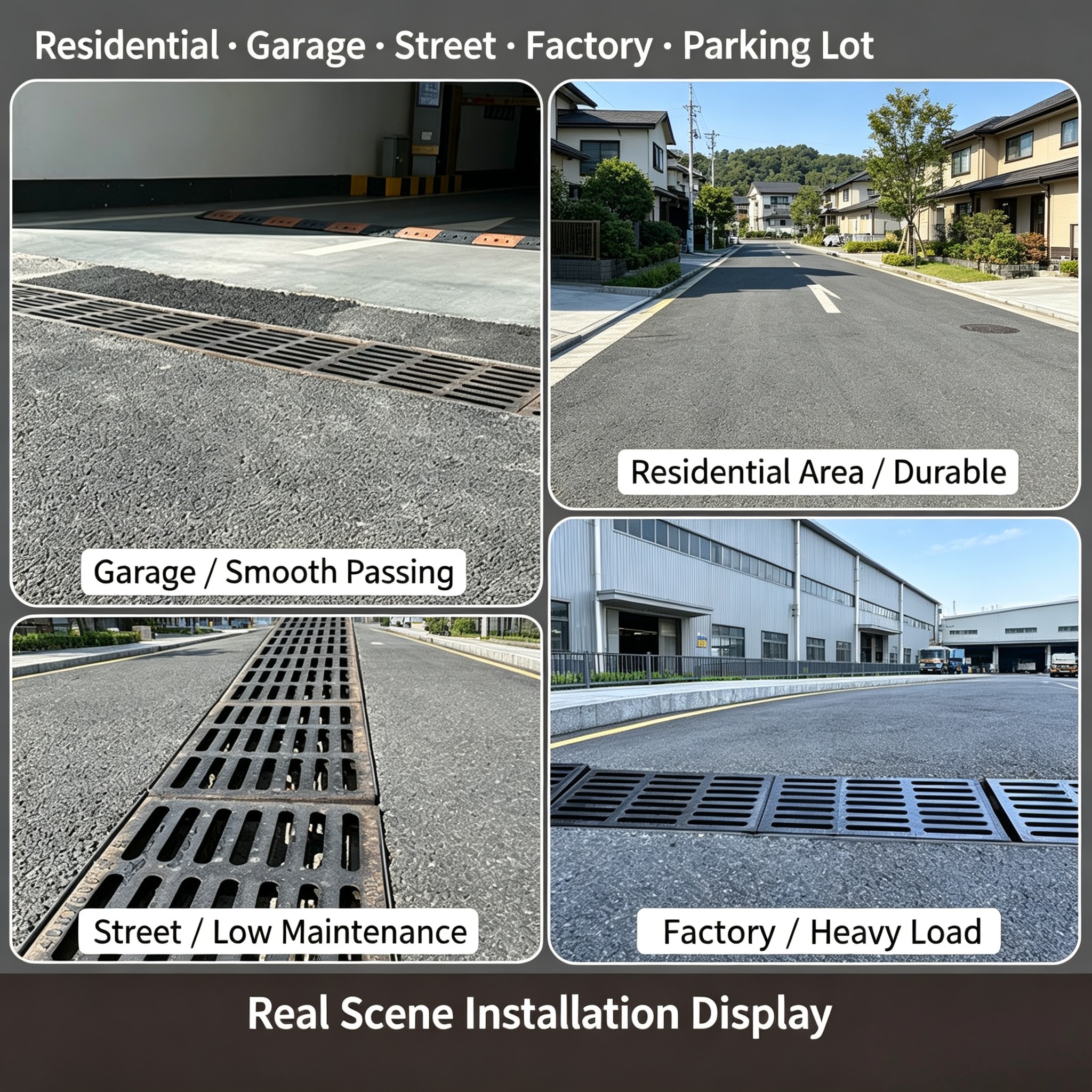
Drainage grates can become damaged for several reasons.
Repeated vehicle loading, accidental impact, improper installation, pavement movement, corrosion, debris accumulation, or long-term environmental exposure may affect the condition of an existing grate.
Common problems include:
A cracked or damaged grate may no longer provide the required support or safe surface condition.
In this situation, replacing the damaged grate with a suitable ductile iron drainage grate can restore the drainage inlet.
A grate that moves, rattles, or does not fit properly may indicate a problem with the grate, frame, supporting structure, or installation.
The complete grate-and-frame assembly should be inspected before replacement.
Leaves, dirt, stones, and other debris can block drainage openings and reduce water flow.
Cleaning the grate may solve the problem if the grate itself remains in good condition. If the grate is damaged or heavily worn, replacement may be more appropriate.
Sometimes the problem is not the grate itself. The frame may have moved, or the surrounding pavement may have settled or cracked.
In these situations, replacing only the grate may not solve the underlying problem. The frame and supporting structure should also be inspected.
Replacing a drainage grate should be treated as a complete repair process rather than simply placing a new cover over the opening.
Before starting the repair, inspect:
Determine whether only the grate needs replacement or whether the frame and surrounding structure also require repair.
Accurate measurements are important when replacing an existing drainage grate.
Measure the:
Do not rely only on the nominal size of the old grate.
For replacement projects, providing photographs, drawings, or detailed measurements to the manufacturer can help confirm compatibility before production.
The replacement product should match the actual installation conditions.
Consider:
Material:
Ductile iron can be selected for applications requiring a strong and durable cast drainage component.
Load Requirement:
The expected traffic and project load classification should be confirmed before selecting the product.
Dimensions:
The replacement grate must fit the existing frame or be supplied with a compatible new frame.
Opening Design:
The opening pattern should provide suitable water collection while considering debris and maintenance requirements.
Surface Treatment:
Coating or surface treatment should be selected according to the environmental conditions and project requirements.
Remove the damaged grate and clean the surrounding area.
Check the supporting surface and frame for cracks, movement, deformation, or other damage.
If the frame has become unstable, it may need to be reset or replaced before installing the new grate.
Position the frame correctly and make sure it is level with the surrounding pavement or drainage channel.
The supporting structure should be strong enough to transfer loads appropriately.
After the frame is securely positioned, install the ductile iron drainage grate and check that it sits correctly within the frame.
The final installation method should follow the project design, local construction requirements, and manufacturer's recommendations.
After installation, check:
The grate should sit securely without excessive movement.
Roads are one of the most common applications for drainage grates.
Rainwater can accumulate on road surfaces, especially around low points, intersections, curbs, and drainage channels.
Properly selected drainage grates help collect surface water and direct it into the underground drainage network.
Parking areas experience vehicle traffic and surface water runoff.
Ductile iron drainage grates can be used around parking spaces, entrances, exits, and drainage channels where the product's load requirements are suitable for the application.
Drainage grates can be installed along sidewalks and pedestrian areas to prevent standing water.
For these locations, the grate design should also consider pedestrian safety and the surrounding pavement.
Municipal drainage systems may require large quantities of standardized drainage components.
Ductile iron drainage grates can be used in stormwater collection systems, roadside drainage, public roads, and other municipal infrastructure applications.
Factories, warehouses, logistics areas, and industrial yards may require drainage systems to handle rainwater, cleaning water, or other surface runoff.
The drainage grate should be selected according to the expected traffic, environmental conditions, and project requirements.
Shopping areas, residential communities, office buildings, and commercial properties also require reliable surface drainage.
The right grate can combine practical drainage performance with a suitable appearance for the surrounding environment.
| Repair Situation | Recommended Approach | Key Consideration |
|---|---|---|
| Damaged grate | Replace the grate | Confirm size and load requirement |
| Cracked grate | Replace damaged component | Check frame condition |
| Loose grate | Inspect grate and frame | Check fit and supporting structure |
| Blocked grate | Clean and inspect | Check drainage flow |
| Damaged frame | Repair or replace frame | Confirm frame dimensions |
| Pavement settlement | Repair surrounding structure | Re-level frame before installation |
| Corroded surface | Inspect and evaluate | Consider suitable surface treatment |
| Complete drainage inlet damage | Replace assembly | Match grate, frame, and channel |
Regular maintenance can help keep drainage systems working effectively.
Remove leaves, dirt, stones, and other debris that may restrict water flow.
Look for visible cracks, deformation, severe surface damage, or other signs of deterioration.
A stable frame is essential for a properly functioning drainage grate. Check for movement, settlement, cracking, or damage around the frame.
Changes in pavement level can affect the fit and stability of the grate.
After heavy rainfall, inspect areas where water tends to accumulate. Poor drainage may indicate blocked openings or problems elsewhere in the drainage system.
When purchasing a replacement, provide as much technical information as possible.
Important information includes:
For custom drainage projects, manufacturers may be able to produce Ductile Iron Drainage Grates according to customer drawings and project specifications.
Ductile Iron Drainage Grates are used in a wide range of drainage applications, from roads and parking areas to municipal, commercial, and industrial infrastructure.
When a drainage grate becomes damaged, loose, blocked, or worn, the repair process should begin with an inspection of the grate, frame, drainage channel, and surrounding pavement. Correct measurement and product selection are essential for a successful replacement.
For new installations or replacement projects, buyers should consider dimensions, load requirements, frame compatibility, drainage capacity, surface treatment, and applicable standards before placing an order.
Need Ductile Iron Drainage Grates for a repair, replacement, or new drainage project? Send us your dimensions, photos, drawings, application conditions, or quantity for a suitable product recommendation and quotation.


